We earn a commission if you buy through our links, at no extra cost to you.
Best Ice Maker for a Home Bar: Clear Ice, Cube Size
Clear vs cloudy ice, cube size and dilution, why countertop machines cannot make 2-inch cubes, and which four ice makers suit a home bar.
At a glance
For a home bar, the NewAir ClearIce40 makes clear countertop cubes without plumbing, while the Whynter UIM-502SS is the plumbed 15-inch clear-ice choice. The NewAir 15-inch undercounter nugget suits crushed-ice drinks. Large cubes and spheres still need a freezer mold, because no countertop machine here makes them.
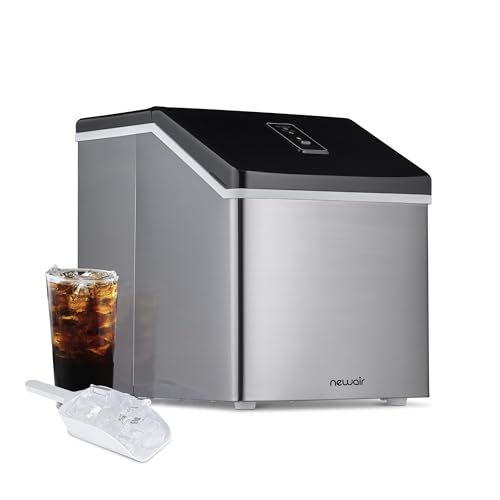
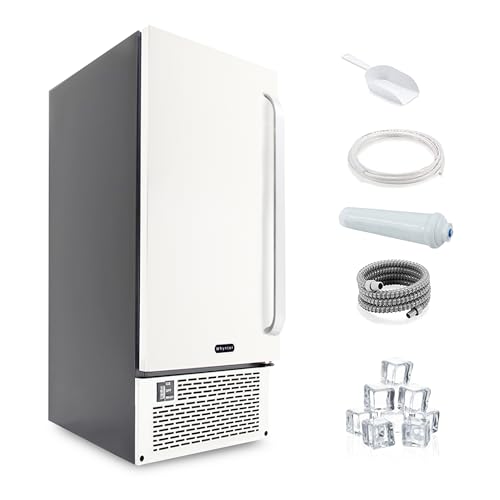
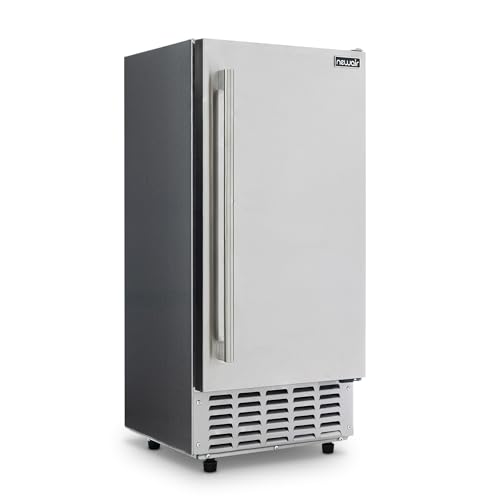
A home bar asks more of ice than a kitchen does. In a glass of bourbon, ice is an ingredient: it chills the drink, dilutes it and is the first thing a guest sees. That is why bar ice has its own vocabulary of clear cubes, big rocks and crushed ice for tiki drinks, and why shoppers searching for a whiskey or bartending ice maker run into so many confusing claims.
This guide sorts out what matters for a bar and then matches four machines to different setups. We have not handled these machines. We compared the manufacturers’ product pages and manuals, which we cite at the end, and we point out where those documents disagree. To see every model we cover side by side, read our ranking of the best ice makers of 2026.
Clear Ice vs. Cloudy Ice, and Why It Matters
Ice from a tray or a basic portable machine freezes from the outside in. Polly Burey, a food science professor at the University of Southern Queensland, explains that this traps “mostly air bubbles, dissolved minerals and gases” in the middle of the cube, and the trapped material scatters light, which is why the cube looks cloudy. Clear ice depends on how the water freezes, not on starting with fancier water. Freezing the water in a single direction pushes the air and impurities to one side, where they can be cut away or washed off.
Burey also writes that clear ice is denser and melts more slowly, so it dilutes a drink less quickly. We found no measured melt-rate comparison, so treat the size of that effect as unconfirmed. If you sip a spirit slowly, the claim is that a clear cube gives up its water more reluctantly than a cloudy cube of the same size.
Clear-ice machines copy that idea. Instead of freezing a cube in a closed mold, they run water over a chilled surface so it freezes in layers while the dirtier water falls away. According to Whynter, its UIM-502SS does this with recirculating water, and NewAir says the ClearIce40 sends water cascading over a super-cooled tray. Both machines make flat, clear cubes in batches.
Cube Size, Surface Area and Dilution
Dilution has two causes: how cold the ice starts and how much surface it exposes. A handful of small cubes exposes a lot of surface, so they chill a drink fast and then melt quickly. One large cube exposes less surface per ounce of ice, so it chills more gradually and keeps the drink stronger for longer. That is the whole case for large rocks and spheres in whiskey glasses.
Here is a practical way to match ice to drinks:
- Sipping spirits over ice: the largest, clearest ice you can get. A clear cube from a machine is better than cloudy bullet ice, but a big mold cube is better still.
- Shaken or stirred cocktails: cold, hard ice. Any hard cube works, and clear cubes are a nice bonus.
- Highballs, mules and soda drinks: medium cubes, plenty of them. Volume matters more than clarity.
- Crushed-ice drinks: nugget or pebble ice, which is soft and chewable and absorbs the flavor of the drink.
An Honest Note: Countertop Machines Do Not Make Large Cubes
This is the point most product listings leave out: none of the machines in this guide makes a 2-inch cube or a sphere. The NewAir ClearIce40 makes small cubes in batches, and they do not match the large single cubes some bartenders prefer. NewAir does describe a setting for thicker cubes: turn the unit off and hold the power button for more than five seconds, and each cycle then adds about three minutes. That gives you a sturdier small cube, not a big one.
If a large cube or a sphere is the goal, the practical tool is a silicone mold in the freezer, or an insulated directional-freezing cooler. A machine can supply ice for shaking, stirring, highballs and crushed-ice drinks while a mold supplies the one showpiece cube for the whiskey glass. Do not buy an ice maker expecting it to replace the mold.
Undercounter vs. Countertop for a Bar
The choice mostly comes down to plumbing and space.
Countertop machines plug into a normal outlet and you fill a reservoir by hand. They need counter space near an outlet, and they hold a small amount of ice. They suit a bar cart, a pantry counter or an apartment where you cannot touch the plumbing.
Undercounter machines are permanent. The two 15-inch models here both take a direct water feed and a drain, store more ice, and slide into a cabinet opening or stand alone. Measure the opening carefully. According to Whynter, the UIM-502SS is 14.6 inches wide, 32.8 inches high and 23.6 inches deep. According to NewAir, its 15-inch nugget model is 15 inches wide, 33.1 inches high and 17.9 inches deep. Both call for ventilation clearance, so a snug cabinet cutout is not enough by itself.
On the plumbing side, Whynter’s manual calls for at least 15 psi of supply pressure, says the machine should be installed by a licensed plumber, and describes a drain hose that runs to a floor drain or a trapped standpipe, with a condensate pump as an option when there is no drain nearby. NewAir lists a pump drain for its nugget machine, which can give more freedom on drain placement, but we could not open its manual, so confirm hose lengths and pumping height before you plan the installation. If you have no water line near the bar, budget for a plumber or choose a countertop model.
NewAir ClearIce40: Clear Cubes Without Plumbing
A countertop machine that makes small clear cubes from a reservoir you fill, with no water line. It suits a home bartender who wants slower-melting cubes on a counter or bar cart.
According to NewAir, the ClearIce40 makes up to 40 lb of clear cubes per day in a freestanding unit about 14.5 inches deep, 11.4 inches wide and 13.75 inches high. It is ETL certified, has a removable ice bin and a scoop, and uses a rubber drain plug at the back for emptying. Full-basket and add-water lights tell you when to act. See our NewAir ClearIce40 profile for the details.
Two caveats: NewAir’s page says a batch arrives every seven minutes, while the owner’s manual describes cycles of about 15 to 30 minutes depending on the room, so plan around the manual’s figure. The manual also asks you to keep the room below 90°F, change the water every 24 hours and use potable water rather than distilled, since distilled water can cause false add-water alerts. There is no self-cleaning cycle and no timer. The warranty is advertised as 2 years on the page and described as 1 year in the manual, so read the terms on the listing you buy from.
Whynter UIM-502SS: The Plumbed Clear-Ice Option
A 15-inch built-in or freestanding clear-ice machine with a pre-installed filter and a 25 lb bin. It suits a basement bar or wet bar that already has a water line and a drain.
Whynter says the UIM-502SS makes clear cubes by recirculating water, stores up to 25 lb, includes an NSF-certified inline filter and a scoop, and has a reversible door. It is also listed as Energy Star rated and ETL-S sanitation certified, according to Whynter. The product page lists up to 80 lb per day, while the instruction manual lists 50 lb per day, and the manual adds that the real quantity varies with room and water conditions. We would size a bar around the lower figure, which is plenty for a household and most gatherings. See the Whynter UIM-502SS profile for the full comparison of the two documents.
Two manual notes matter for a bar. First, Whynter says to throw away all the ice made during the first three hours of operation. Second, very hard water that has been softened can produce white, mushy cubes that stick together, and deionized water is not recommended. The unit is about 76 lb in the manual and 91 lb on the product page, so plan on two people to move it. The warranty is one year, limited.
NewAir 15-Inch Undercounter Nugget: For Crushed-Ice Drinks
A plumbed 15-inch machine that makes soft nugget ice and holds 17 lb in two buckets. A fit for a bar that leans toward mules, juleps, tiki drinks and big gatherings.
According to NewAir, this machine makes up to 66 lb of nugget ice per day, holds 17 lb in two removable 8.5 lb buckets, produces a first batch in 10 to 15 minutes and is listed as under 65 dB. It has a timer, a cleaning function and a 2-year warranty on the product page, and it is ETL/cETL certified. It is built in or freestanding. Our NewAir 15-inch undercounter nugget profile has the full specs and the details we could not confirm.
Nugget ice is the wrong tool for a slow pour of single malt because it melts faster than a clear cube. For a mint julep or a bar that serves a lot of soft drinks, it is a very good match, and the two-bucket design lets you carry ice to a serving station. Under 65 dB is a maximum rating, not a quiet one, so think about where the bar sits.
GE Profile Opal 2.0 Ultra: Countertop Nugget With a Filter
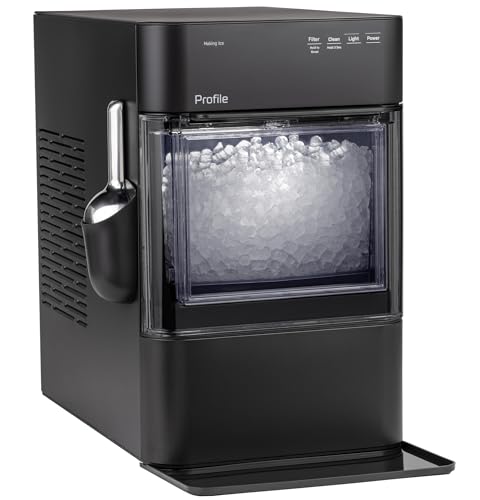
A countertop nugget machine with a scale-inhibiting filter, WiFi and a magnetic scoop. It suits a bar that wants soft, chewable ice without a water line.
GE says the Opal 2.0 Ultra makes up to 38 lb per day at mild conditions and 32 lb under the warmer DOE conditions, and stores 3 lb in a drawer. It measures 10.5 inches wide, 16.5 inches high and 17.5 inches deep, and GE lists a 44 dBA rating. It adds a scale-inhibiting water filter that GE says lasts about 3 months, a washable air filter and built-in WiFi through SmartHQ. See our GE Profile Opal 2.0 Ultra profile.
The trade-off for a bar is the small bin: 3 lb refills slowly, so for a party you scoop ice into a freezer bag or cooler and let the machine run again. GE’s support page recommends weekly cleaning and sanitizing, plus descaling on a schedule that depends on water hardness and includes an 18-hour vinegar soak. Plan for that routine.
Cleaning a Bar Ice Maker
Ice is food. An article in Food Safety Magazine says the FDA requires that machines be cleaned per manufacturer directions or whenever contamination is seen, that bins should be cleaned at least monthly, and that scale should be removed at least twice a year or as the manufacturer directs. The same article says the temperature inside an ice machine is not cold enough to kill bacteria and names biofilm, foul odors and discolored seals as warning signs. It is a trade article, not a regulation, so check the manual for your own model first.
Manuals add specifics. Whynter says to clean the condenser at least every six months, sooner with pets or dust, and never to store bottles in the bin because labels can clog the drain. NewAir’s ClearIce40 manual says to change the reservoir water every 24 hours and to clear the water separator pipe. For countertop machines, change the water, empty the bin before a long absence and keep the air vents clear. Hard water can speed up scale buildup, so check each manual before choosing filtered water.
Which One Fits Your Bar
- No plumbing, want clear cubes: the NewAir ClearIce40, and add a mold for large cubes.
- A real bar with a water line and drain, want clear ice: the Whynter UIM-502SS.
- A real bar that serves crushed-ice drinks or crowds: the NewAir 15-inch undercounter nugget.
- A counter bar, soft ice, a filter and an app: the GE Profile Opal 2.0 Ultra.
Whichever you choose, three things decide whether you will be happy: whether the output matches how you entertain, whether the plumbing or reservoir routine fits your life, and whether you will clean it on schedule. To compare all the models, see our home ice maker ranking.
Sources
- NewAir ClearIce40 official product page
- NewAir ClearIce40 owner’s manual, ManualsLib
- Whynter UIM-502SS official product page
- Whynter UIM-502SS instruction manual (PDF)
- NewAir 15” Undercounter Nugget Ice Maker official product page
- GE Profile Opal 2.0 Ultra XPIO23SWBB, GE Appliances product page
- Opal Nugget Ice Maker cleaning and descaling, GE Appliances support
- The Conversation: clear ice, by Polly Burey, University of Southern Queensland
- Food Safety Magazine: Don’t forget about ice machines
Frequently asked questions
Why is clear ice better for whiskey and bourbon?
Clear ice has no trapped air bubbles or impurities, and a food science professor at the University of Southern Queensland writes that it is denser and melts more slowly. Slower melting means less dilution while you sip. The effect depends mostly on cube size, so a large clear cube beats a small one.
Can a countertop ice maker make large 2-inch cubes or spheres?
Not the models we cover. The ClearIce40 makes small cubes in batches, and none of the machines on this page makes a single large cube or a sphere. For a big cube or a sphere, use a silicone mold or a directional-freezing cooler in your freezer.
Is nugget ice good in cocktails?
It suits drinks that call for crushed or pebble ice, such as a mint julep, a Moscow mule or a swizzle. It is a poor match for sipping whiskey over ice, because nugget ice has a lot of surface area and melts faster than a clear cube.
Do I need a water line and a drain for a home bar ice maker?
Only for the undercounter models. The Whynter UIM-502SS and the NewAir 15-inch nugget connect to a water supply and a drain, and Whynter's manual says a licensed plumber should install the UIM-502SS. Countertop models such as the NewAir ClearIce40 and the GE Opal 2.0 Ultra use a reservoir you fill by hand.
How wide is an undercounter ice maker cutout?
Both undercounter models here are 15-inch units. According to Whynter the UIM-502SS body is 14.6 inches wide, 32.8 inches high and 23.6 inches deep, and according to NewAir the 15-inch nugget machine is 15 inches wide, 33.1 inches high and 17.9 inches deep. Leave the ventilation clearance listed in each manual.
How often should I clean a bar ice maker?
Follow the manual for your model. Whynter says to clean the condenser at least every six months, and GE recommends weekly cleaning and sanitizing of the reservoir on Opal models without a round front button. Food Safety Magazine also advises cleaning ice bins at least monthly and removing scale at least twice a year, or as the manufacturer specifies.